Thursday, October 5, 2017

INFOGRAPHIC: How to Teach Your Kids to Be Prepared...For Anything!

We've got a great guest post today from Mike's Gear Reviews. Many thanks for this great information!

When it comes to survival skills, it’s sometimes hard to know where to start on your learning journey. Information can be obtained easily but is it always correct? You need to ensure that the right knowledge is being taken in and then cascaded down to your family, particularly your children.
Kids are impressionable and able to soak in new lessons like a sponge. Therefore, it’s important to get across key ideas from an early age and then gradually build upon this with further education as they become age appropriate.
If you plan well and get things organized, there’s so much to be gained from long term preparedness. Your kids will be able to take the lessons on-board and carry the crucial survival tips with them throughout their lives. The way you go about this can be executed with fun and adventurous games that can be played in the garden or your local park, through to family meetings and discussions.
Below you will find a helpful infographic provided by MIkesGearReviews which details numerous steps and ideas that you can implement to keep your family safe and secure and give your kids the tools they need to succeed and be prepared for anything.


Wednesday, April 26, 2017

What Can You Eat While You're Pregnant?

Many thanks to Vanessa over at New Mom Vintage for putting this infographic together and contributing this valuable information. 


A woman goes through a lot of phases when she is pregnant, morning sickness, mood swings, food cravings, et al. And none of it should ever be ignored since pregnancy is an important phase, and nothing should be ignored.

Take care of every small thing, make sure you are comfortable at all times, and have everything that you need. While I talk about this, I should also talk about something that is very important for a woman and her child's health. Food. While a pregnant woman wants to eat everything she craves, this should not be the case.

There are a lot of things that should not be consumed, no matter how much you crave it.

And we are here, with the complete list of things you can and can’t eat when pregnant to help you make safer eating decisions for your baby and yourself.
Don't miss our healthy recipes for sweet potato chips, energy balls, and almond maple popcorn.

Thanks again to Vanessa from New Mom Vintage for contributing this great information!

Wednesday, October 8, 2014

A Conversation About Postpartum Depression with Author Megan Cyrulewski


Mothers of infants and young children experience a lot of highs and lows. They don't get much sleep and can feel overwhelmed with all the new responsibility. On the other hand, watching a precious baby learn and grow is one of the most satisfying, joyous events a person can experience. Sometimes, in the midst of these highs and lows, mothers can get stuck in the very deep lows of postpartum depression. A babysitting co-op can be instrumental in helping a mother suffering from postpartum depression to cope with this difficult condition.

Author Meg Cyrulewski has taken the time to answer some of our questions about postpartum depression. Many thanks to Meg!

Co-op 101: How do you view postpartum depression now that you've been through it yourself?

Meg: I used to have a very narrow-minded view.  Coming from a law perspective (because I’m an attorney) I honestly thought that postpartum depression was a terrible defense like when Andrea Yates used it. Now having been through it myself, I can’t say I condone what she did but I can understand how she could have done what she did.  It’s just one of those things that you can’t really explain it to someone unless they’ve been through it.

Co-op 101: What advice do you give to women who are experiencing postpartum depression?

Meg: Never be ashamed to seek treatment.  I went to the psych ward in the hospital because I needed treatment ASAP so I could take care of my baby.

Co-op 101: What advice do you give friends and family members of women who are suffering from postpartum depression?

Meg: You may not understand what she feels, but just be there to support her.

Co-op 101: How can a community of friends support one another as they welcome new babies into their families?

Meg: Every child is different.  Just because my friend’s child started walking at 9 months doesn’t mean mine will - and there’s nothing wrong with it.  Just have fun with each other’s kids.  It’s a whole new relationship because we’re all parents now!

Co-op 101: How have your recent experiences changed you as a mother and friend?

Meg: I see the world through my daughter’s eyes and I love it.  Madelyne had her first dance recital this past June and I bawled like a baby.  I used to dance too so it’s just such a joy to see her love something as much as I did when I was her age.  As a friend, it’s nice to be able to give advice.  Like today, my friend’s 1-year-old has a really bad cold so she asked me for advice.  I like that I can help.

You can learn more about Meg Cyrulewski and her new book Who Am I? How My Daughter Taught Me to Let Go and Live Again at her website.

Tuesday, September 16, 2014

"Caramel" Fruit Dip

Do your kids need a little motivation to eat their fruit? This "caramel" fruit dip ought to do the trick.

"Caramel" Fruit Dip

8 ounces cream cheese, softened
3/4 cup brown sugar
1/4 cup white sugar
1 tsp. vanilla

Mix all ingredients with an electric mixer and serve with a variety of fruit. It's extra good with

  • apples
  • grapes
  • strawberries
  • peaches
  • pears

Monday, August 18, 2014

Cost to Raise Today's Kids: More Than $250,000?

According to a Federal report released today, raising a child in the United States now costs more than $250,000. If you look at the details of the report, you'll find that child care costs exceed the cost of food.

As we know here at Babysitting Co-op 101, creative parents working together can significantly reduce or even eliminate child care costs while offering other important benefits to neighborhood families, such as


  •  Friends for kids and parents 
  • A greater sense of community 
  • A spirit of cooperation 
  • Free time for parents 

It's easy to feel overwhelmed when reports like this surface, but these reports are based on the gathering of economic data and generalizations about how household finances operate. Child care doesn't have to cost more than food. In fact, it doesn't have to cost anything at all.

Pick up a copy of Babysitting Co-op 101 today to learn how you can eliminate child care costs from your budget while securing quality child care for your kids from adults you know and trust. This book contains everything you need to get your co-op up and running. It's full of resources, encouragement, and success stories.

Friday, July 18, 2014

A Virginia Babysitting-Cop, 50 Years Strong

I thought it was so fun to see a Washington Post news story about the Aurora Hills Babysitting Co-op earlier this month. This co-op has been in operation for 50 years! Just think of that. The original kids who were babysat by the organizers of this co-op could have grandchildren who are currently involved in the co-op. What a great testament to the power of neighborly cooperation. Take a few minutes to read the article, and then get inspired to start your own co-op. Who knows? Maybe your grandkids will be participating someday in the group you organize.
Bettina Lanyi/FOR THE WASHINGTON POST

Wednesday, May 21, 2014

Parenting Resource: Learning at Home


Did you realize that you're building your child's cognitive foundation as you read bedtime stories and talk about your day? Our guest blog poster today, Rhonda Cratty, helps us to understand the importance of helping children learn to summarize. Below is an excerpt from Rhonda Cratty's Learning at Home. You can find links to the book at the bottom of this post. Many thanks to Rhonda for sharing her expertise with us.

Teaching your child to summarize is an excerpt from Learning at Home by Rhonda Cratty.

Teaching your Child to Summarize
Teaching children to summarize is no small task. Summarizing is one of the hardest strategies for children to grasp because it requires time and lots of practice. Your child needs to see and hear summarizing modeled. Summarizing is such a valuable strategy it is well worth a few small moments as you read those good night stories.

What is Summarizing?
Summarizing is how we take the gist, the key ideas, the main points that are worth noting and remembering out of a text.

What are We Doing When We Summarize?
When we summarize, we focus on the heart of the work. We try to find the key words and phrases that manage to capture the main idea of what we have read. 

What are Reasonable Summarizing Goals for Children?
-Pull out main ideas
-Focus on key details
-Use only key words and phrases
-Write only enough to convey the main idea
-Take succinct but complete notes of larger ideas

Strategies for Practicing Summarizing
-Have your child practice verbalizing summaries of familiar or interesting topics, such as "What I did during a sport or music practice," or "What I did at school today."
-After you finish reading picture books, use key words or phrases to identify who, what, when, where, why, or how in the story. Who is the story about? What did the characters do?
-Keep a reading diary. If parents do the writing and children do the thinking, this should take just a few minutes.
-Write the title of the book, date and a headline for the story. By summarizing in a headline, your child will begin to sort out main ideas from details of the text. Do not require sentences. Keep it under six words each evening.
-As you read non-fiction, help your child to recognize that sub-titles are summaries. 
-Summarize the lyrics from a favorite song or poem.
-Summarize a movie, field trip, party.

Summarizing is more than retelling it is a higher level of thinking. It involves analyzing information, distinguishing important from unimportant elements then translating large chunks of information into a few short cohesive sentences. Fiction and non-fiction texts, media, conversations, internet information, and events are sources to practice summarizations. Summarizing is an important skill. With the digital age, and the speed at which our children receive new information, summarizing will be imperative to the adults of tomorrow.
Working with summarizing is truly about equipping your children to be lifelong learners.

Learning at Home by Rhonda Cratty is a new parent resource filled with ideas to help children become the best they can be. Daily activities for family fun, that make subjects become more than pencil and paper, moving learning into everyday life. Learning at home can be purchased in print ($8.48) or eBook($4.48) form through http://www.amazon.com/dp/1494917203

For more information please see http://famfunlearn.com/.

Tuesday, May 13, 2014

Park Days

Summer is almost here, and if your babysitting co-op needs a little social rejuvenation, plan a few park days for the summer. Park days are informal get-togethers where co-op parents and kids can spend some time enjoying the sun and getting to know each other better. This is also a good time to find new neighborhood families if you're looking for a few new members.

To organize summer park days, choose a few specific times when you can meet at a local park. Then send out text messages or emails to inform everyone of the dates. Here's an example:

Sandhills Babysitting Co-op Park Day

We're meeting at Moser Park for some play time and fun!

When: Fridays in June
What Time: 11:30
Where: Moser Park, corner of Washington & 22nd

Bring a lunch and join us for an hour or two of play time. There's a sandbox, so bring sand toys if you want. Invite friends or neighbors who might be interested in joining our babysitting co-op. See you there!

Make sure you don't schedule your park days over an existing babysitting shift, or someone will be stuck at home while you're all enjoying yourselves in the sunshine. Summer park days are also a great time for school-age kids to feel like they're a part of the babysitting co-op as well. You may find yourself looking forward to park days as much as your kids do!

Tuesday, April 22, 2014

5 Top Money-Saving Tips: Guest Post from Everyday Life on a Shoestring

If you haven't visited Sarah's Everyday Life on a Shoestring, it's high time you did. This blog is full of fantastic money-saving tips for parents of young children. It's personable, friendly, and charming, and we're honored to have Sarah with us on Babysitting Co-op 101 today. She's sharing some of her best money-saving tips with us. After you finish reading this post, we suggest you hop on over to her blog and learn some more!


Having kids is an expensive business. According to the Guardian newspaper, in 2013 the cost of raising a child in the UK has risen to an astronomical £222,458 ($374,042).


You would be right in thinking that the expensive part of raising a child would be getting them through college or university, but the next most expensive years are from age 1 to 5.


Armed with that knowledge, how can parents of young children save money?


Here are our five top tips (excluding childcare, which is well catered for on this blog!)

  1. The Guardian cites parental guilt over technological gadgets as another major cost; UK expenditure on kit for kids amounts to £302 annually. For young children this simply isn’t necessary. We all know that too much screen time is not good for anyone, especially young children. Our kids are expected to use the family computer and TV rather than having their own and a secondhand console is used for games. Both kids now have phones, but are on the cheapest contract we could find. This approach has not impaired them in any way – they are digital natives and are far more literate in all this stuff than I am.
  2. Buying secondhand also applies to many other things that have been required. From birth we bought clothes, toys, baby equipment, buggies and books secondhand, as well as never saying no to any offers of hand-me-downs. The world is awash with plastic toys and kids equipment, so don’t contribute to this ocean by buying new. Check out charity shops, eBay, school sales and Freecycle.
  3. From an early age, encourage children to save their own birthday, Christmas or pocket money to buy the things that they want. This teaches them the value of things and helps clarify whether an item is something they really want or just a whim.
  4. Avoid peer pressure! Just because other friends are going on expensive holidays or cinema trips, attend multiple after-school clubs, or have the latest gadget, it doesn’t mean that everyone has to. A camping holiday, playing in the garden at home, having a friend to play or watching a DVD together as a family can be just as fun. And today’s busy children need down-time as much as we do.
  5. The best things in life really are free! Parks, puddles, trees, the sky, museums, libraries, street entertainers, time with friends and family. It’s all available if you seek it out and costs nothing!
Many thanks to Sarah at Everyday Life On a Shoestring for this post!

Monday, April 14, 2014

McLean Gardens Babysitting Co-op

The McLean Gardens Babysitting Co-op in Washington, D.C., has been operating for more than 10 years. Based on Gary Myers' Smart Mom's Baby-sitting Co-op Handbook, this co-op usually has about 10 to 15 families at any given time. Parents in the co-op have graciously shared some details about how the co-op works to help people who are thinking about starting their own co-ops.

Structure

The McLean Gardens Babysitting Co-op works on a point system, and a secretary handles all transactions. If you want to find a sitter, you call or e-mail the secretary who arranges a sit for you by sending out an email to everyone to see who's available. After the sit is over, the sitter contacts the secretary to report the amount of time that should be deducted and added to each parent's total.

As parents come into the co-op, they start with a zero point balance. They earn points by babysitting, but they can "go into debt" and have a negative point balance as well. When people leave the co-op, they're supposed to pay an hourly fee to the co-op for any points below zero.

Communication


The parents in the McLean Gardens Babysitting Co-op have set up a Yahoo groups e-mail distribution list, which they use for setting up sits as well as communicating about monthly meetings. They also keep a database of points on paper that gets passed from secretary to secretary.

Roles


There are several roles that have to filled at all times for this type of co-op to function: Leader, Secretary, Treasurer, and List Serve Manager. The Secretary role rotates monthly among the members, and the Treasurer and List Serve Managers rotate quarterly:
  • Leader. The leader makes sure the co-op runs smoothly, settles any issues, and organizes monthly meetings. This role rotates quarterly.
  • Secretary. As you probably noticed from the description above, the Secretary is a busy person. That's why this job switches monthly. Taking requests and finding sitters can be time-consuming, but the Secretary is compensated with extra points. The secretary receives 2 points from each person in the co-op during his or her month in office.
  • Treasurer. The treasurer keeps track of the money for the co-op. The McLean Gardens Babysitting Co-op collects $20 per family per year. The Treasurer is compensated with 1 point per quarter per family, and the job rotates monthly.
  • List Serve Manager. The List Serve Manager maintains and operates the List Serve and earns 1 point per quarter from each family. List Serve Managers serve for one quarter at a time.

Benefits


Members of the McLean Gardens Babysitting Co-op enjoy many benefits, including the following:


  • Great community. Most of the co-op members live within walking distance of one another. They're very supportive of each other. If one parent is late getting back from a doctor appointment, she know she can send out a text and have somebody else pick her kids up from school.
  • Hand-me-downs. This co-op doesn't just help each other with child care; they also pass around gently used clothing.
  • Social gatherings. Co-op members get together bi-monthly for social gatherings where they can get to know new members and enjoy each other's company.
If you're in the D.C. area and want to know more about the McLean Gardens Babysitting Co-op, you can email them at mgbcsits@gmail.com.

This co-op is a great example of what a babysitting co-op can do for you. It's structured differently than the co-ops you can learn about in Babysitting Co-op 101, which don't rely on a secretary or require fees, but the principles of cooperation and mutual benefit are the same. Again, we thank the members of McLean Gardens Babysitting Co-op for sharing their expertise and experiences with us.


Thursday, March 27, 2014

Goodreads Giveaway!

Goodreads Book Giveaway

Babysitting Co-op 101 by Samantha Fogg Nielsen

Babysitting Co-op 101

by Samantha Fogg Nielsen

Giveaway ends March 31, 2014.

See the giveaway details at Goodreads.

Enter to win

Tuesday, March 25, 2014

4 Huge Benefits of Babysitting Co-ops

If you haven't yet experienced the benefits of participating in a babysitting co-op you're in for a treat. When people say that their babysitting co-ops changed their lives, they're not exaggerating. The benefits are real, and you start to notice them from the very start. Here are 4 of the most noticeable benefits:

Save Money
Babysitting is not fun to pay for, especially when you're hiring a sitter so you can go to the dentist. Since participating in a babysitting co-op doesn't cost you a single dime, you'll notice the financial benefits immediately. What will you use that money for?

Find Time
Have you ever gone away from your kids for just an hour or two and come back feeling refreshed and ready to be a mom again? What if you could count on time like this on a regular basis? You could take up that hobby you've been putting aside for someday.

Build Community
Life is happier when you have a group of other parents and their children that you know and trust. Your kids feel more secure in a world where there are other adults looking out for them and seeking out their best interest, and your babysitting co-op can become a force for good in your community.

Make Friends
Moving to a new area is tough. Your social life has to start from scratch, and this can be quite difficult. By starting or joining a babysitting co-op, you can make a group of friends that may last for years and years. Often, we hear of women who have been friends since their babysitting co-op days, even though their children are now grown and gone.

Enrich your life by starting a babysitting co-op in your neighborhood.

Wednesday, February 19, 2014

5 Rainy Day Toddler Activities


It's that time of year when you just don't know what to expect from the weather. Your babysitting shift could land on a beautiful sunny day, or it might land on one of those days when you just don't want to get out of bed because it's so miserably cold.

That's why it's always good to have some rainy day activities in your back pocket. No matter what the day, we've got a list of co-op shift activities to keep the kids happy and keep you sane.

The Child Went Over the Mountain

This activity comes from our friend Jaimi at The Stay-at-Home-Mom Survival Guide. It's pretty simple but lots of fun. Pile up a bunch of couch cushions and pillows to make a mountain, and then have your toddler climb over them. Make sure the floor is safe for little heads to fall on (i.e. don't try this on tile).

Salt Paint

This is the coolest. But, okay, maybe it won't keep you entirely sane. You can make salt paint by combining Elmer's glue and Epsom salt. It's sticky and gooey--what a fantastic sensory activity. The results look a lot like beautiful shimmery snow. Thanks to Hands On As We Grow for this one.

Hat's Off!

Raid your newspaper recycling stash and get enough newspaper for every child in your babysitting co-op. Show them how to turn their newspaper into hats. For a wizard hat, roll the paper into a cone and tape the ends together. For an old-fashioned paper hat, fold the paper in half and lay it down with the folded side farthest away from you. Now fold the top two corners down so they touch in the middle of the page. You'll have a piece of paper with a triangle at the top and a long rectangular section across the bottom. There are two layers of paper making up the rectangle. Take the top layer of the rectangle and fold it up to the bottom of the triangle, then up again. Now turn the hat over and do the same thing with the bottom layer. 

Play Dough

It never hurts to have a stash of homemade play dough in your refrigerator for those rainy day co-op shifts. Use the following recipe for making your own dough, and then check out these fun play dough ideas from Sheryl at Teaching 2 and 3 Year Olds.

  • 2 cups plain flour (all purpose)
  • 2 tablespoons vegetable oil
  • 1/2 cup salt
  • 2 tablespoons cream of tartar
  • Up to 1.5 cups boiling water (adding in increments until it feels just right)
  • food colouring (optional)
  • few drops glycerine (optional- adds more shine!)
Mix the flour, salt, cream of tartar and oil in a large mixing bowl. Add the boiling water and stir continuously until the dough becomes sticky and thoroughly combined. Add the food coloring and glycerine. Allow it to cool until it isn't comfortable to handle, and knead it vigorously for a couple of minutes. If it's too sticky add just a little flour. Keep it supple by storing it in a sealed plastic container in your fridge.

Shape Scavenger Hunt

Cut shapes out of paper: oval, circle, triangle, square, rectangle, hexagon, star. Give a shape to each child and start exploring your house looking for items that are shaped like the pieces of paper the children are carrying. It's amazing what you can find when you're looking for something simple and specific!

Have fun on your rainy day babysitting shifts! It might be so fun at your house on rainy days that you'll start hoping the sun won't come out! 

Monday, February 3, 2014

Story Time: My Name is Not Isabella

Pick up Jennifer Fosberry's My Name is Not Isabella and save it for a day when you have all girls at your babysitting co-op shift. On that, pull out this short gem-of-a-book and read it aloud. At least once.

Isabella is a character with a big imagination, but her heroes are real women who did really extraordinary things. The book includes short biographies of the featured heroines: Sally Ride, Annie Oakley, Rosa Parks, Marie Curie, and Elizabeth Blackwell. What I love most of all about this book is the admiration for mothers. Yes, all of these women did wonderful things, but the story makes it clear that mothers are extraordinary for their everyday sacrifices and work. And that's a message that girls haven't heard enough over the last 40 years.

This line says it all: "A mother is a person who uses love and wisdom to raise children to be caring, accomplished adults." That's a goal worthy of any amazing girl.

You'll love Mike Litwin's bright, colorful illustrations that accompany the text as well. Check out his website for animations about Isabella.

Thursday, December 12, 2013

Co-op Christmas Cookie Exchange


What's a cookie exchange? You bake one kind of cookie, and you go home with a beautiful assortment of cookies that will last throughout the holidays (presumably).

Are you looking for a great way to bring your babysitting co-op together for the holidays? Why not organize a co-op Christmas cookie exchange. It's simple to organize, doesn't require much work, and allows everyone to get reacquainted. Here's a simple checklist you can use to get your co-op cookie exchange in motion.

  • Send invitations. Invite everyone in your co-op, and if you're in need of a few more families in your co-op, invite a few extra friends or neighbors who might want to participate. This would be a great chance for them to see your co-op in action and get to know the other parents.
  • Determine how many cookies each guest will make. If you have fewer than 10 participants, ask each guest to make a dozen for each attendee. If you have more people than that, half a dozen cookies for each attendee should be plenty.
  • Find out who's coming and what kinds of cookie's they're bringing. If everyone is bringing coconut macaroons, gently suggest some variety, like these white chocolate brownies.
  • Decide on a simple menu of snacks and drinks. Cider or hot cocoa are great, along with some vegetables and hummus or finger sandwiches.
  • Find a large table for the cookie spread. If you don't have a large dining room table, set up several card tables and cover them with a large tablecloth.
  • Borrow serving trays. If you can't locate serving trays for displaying the cookies, ask guests to provide their own. In a pinch, cookie sheets draped with cloth napkins work just fine.
  • Purchase extra plates, storage bags, and plastic wrap. If guests don't have a way to transport all of their loot home, you'll have supplies for them.
  • Have the party! When you invite guests in, have them set out there cookies and then mix and mingle while they snack. Allow each guest to take 6 or 12 of each kind of cookie at the end of the party.
  • Collect the recipes. Ask guests to email their recipe to you. You can compile them and send out a master list to everyone as a thoughtful Christmas gift.
What's your favorite holiday cookie recipe ever? We're hungry, and we want to make them.

Wednesday, November 6, 2013

Book Review of Ordinary Mary's Extraordinary Deed

Do the little ones in your babysitting co-op need a kindness lesson? Ordinary Mary's Extraordinary Deed serves up a great kindness lesson without feeling like a lesson at all. It begins with a simple picture of a simple child and says, "Ordinary Mary was so very ordinary that you'd never guess she could change the world. This ordinary kid? She did! She changed the world!"

Ordinary Mary's Extraordinary Deed is a tribute to random acts of kindness and the chains of positive events that can start with something very small. Written by Emily Pearson and illustrated by Fumi Kosaka, this book is a nice read-aloud for preschool-aged kids. They'll enjoy the bright, primary-colored illustrations and the interesting set of characters that influence the friends and strangers around them.

Sometimes I've found that when kids aren't sharing well, or when they're overtired, they just need a reminder about the power that is in them to influence others. Frankly, we all need that reminder from time to time. Reading a story like this one will help to re-set your kids' outlooks and get them back on track.

Wednesday, October 23, 2013

4 Lifesaving Time Management Tips for Stay-at-Home Moms

It's all too easy for mothers of young children to feel they are at the mercy of everybody else. Have you ever felt that you can't make plans because your child may or may not be sleeping? Have you ever dragged kids along to appointments when they really shouldn't have been there? Have you ever gotten to the end of a busy, hectic day and wondered what in the world you accomplished?

Of course you have. I remember reading books about time management hoping to find some ideas of how to take control of my time, but none of the books were written for stay-at-home moms with young children. I thought 7 Habits of Highly Effective People might help, but it was clear from the start that Mr. Covey didn't have to worry about diaper changes and trips to Costco. I tried Julie Morgenstern, and while I found some useful ideas in her concept of placing tasks in designated times, again, I felt that she wasn't addressing my stage in life.

Staying at home with young children is an incredibly rewarding and challenging lifestyle, but if you don't have a plan for managing your time, your life can begin to feel like one bleary crisis after another. Guilt may override the inherent pleasures of motherhood when you feel that you cannot meet all your obligations. You can't care for your young children at the same time you get your hair cut. You can't seem to plan for the future (gifts, meal planning, date night) because you're always dealing with the present. Most of all, you can't remember the last time you spent an hour developing your own talents or pursuing a non-child-centric project of your own.

With the help of a babysitting co-op and a few extra tips, you can take control of your time, reduce your mother guilt, and feel like the captain of your own ship again, even if you have many little ones sticking their fingers under the bathroom door while you try to get a few moments of peace and quiet. Let's see how it's done.

Organize a Babysitting Co-op

Most stay-at-home moms don't have extra cash to spend on babysitting, so they take care of 100% of the childcare themselves. While this is admirable and certainly does save money, it's not your only cash-free option. By working with friends and neighbors in your own situation, you can pool your mothering resources and create time for each of you to take control of your lives and have some time for yourselves. Not only will you rediscover what it's like to go to the store by yourself, but you'll come back to your children with clarity, having had time to make plans, remember who you are, and rejuvenate. For all the information you need to organize a babysitting co-op of your own, read Babysitting Co-op 101.

Make a Weekly Schedule

Your schedule changes from week-to-week, but if you have a rough outline of what happens when, you're better able to manage your time and say "yes" or "no" to requests for your time at a moment's notice. Here's an example of what I'm talking about:

Monday: Laundry, Heavy Cleaning
Tuesday: Babysitting Shift, Baking and Freezer Meals
Wednesday: Shopping, Errands
Thursday: Free Day
Friday: Laundry, Moderate Cleaning
Saturday: Cleaning, Family Day, Preparation for Coming Week
Sunday: Church, Family

Let's say you're making a dentist appointment, and the receptionist asks if Tuesday the 14th will work. You know that you're responsible for a babysitting shift for your co-op on Tuesdays, so right away you know that won't work. However, you know that you can always count on free babysitting on Thursdays, so you ask if she has any appointments available on Thursdays.

Also, when you have a designated time for each of your major tasks, you can put things off a little, knowing they will get done in due time. It's Wednesday, and you notice the laundry piling up in the laundry room. Instead of feeling burdened by that laundry every time you see it, remember that laundry day is just two days away. It will get done. Today you have something else to take care of.

Decide on Your Non-Negotiables

Let's face it. Not everything on our massive to-do lists has to get done. Life will go on (maybe even with a little less stress) if some of those things are left unchecked at the end of the day.Yes, you've been wanting to make those chocolate chip pumpkin bars you found on Pinterest for a week, but they'll still be there if you don't have time to make them now. One person's non-negotiables may be very different from someone else's, and that's fine.

Your list may look different from mine, but here are some of my non-negotiables:

  • Showering and dressing in something other than sweats or yoga pants
  • Cleaning the kitchen after breakfast and after dinner
  • Finding at least 10 minutes for personal devotional time
  • Spending one-on-one time with each child at some point during the day
  • Eating with the family
Outside of these non-negotiables, I can be flexible, but if I let these fundamental-to-me things slip, I don't feel right. I feel like I've lost control of my time and my life. Mountains of other things demand my time, and I will do a whole bunch of other things each day, but if some of those other things don't get done, life goes on.

Plan Just a Little Bit Ahead

When you finally have a few minutes to yourself, instead of immediately watching a re-run of Downton Abbey, take some time to plan "just a little bit ahead." Don't try to tackle a project like freezing a month's worth of crock-pot meals. Just do something to get ahead. Here are some ideas.

  • Look at next week's calendar to see if there's anything unusual to prepare for (a birthday party you need to buy a present for, Mother's Day, etc.).
  • Bake a batch of cookies and put them in the freezer.
  • Cook dinner early!
  • Go through your bill's drawer and make sure everything's on time.
  • Gather up the library books and set them by the door so you don't forget them when you go out on your errands day.
  • Set up a playdate.
  • Make a shopping list.
  • Pack your diaper bag for next time you have to go out.
You'll feel like you have more control over your life when you have little things taken care of ahead of time.

In Conclusion

You are the master of your days, even though it doesn't feel much like it when you're caring for children all day. Children can learn to abide by your schedule, and they can also learn that sometimes they, along with everyone else, has to be flexible in order for a family to thrive peaceably and happily. Organize a babysitting co-op, plan a little ahead, make a weekly schedule, and decide on your non-negotiables. Start today, and tomorrow you'll breathe a little deeper.

5-Minute Personalized Tooth Fairy Money Holder

Every now and then, our tooth fairy forgets about her duties (for a couple of days), and when this happens, she wants to do something a little extra special to make sure the toothless one feels extra-special and loved. In this case, our forgetful tooth fairy used a couple of 3x5 cards and a sewing machine to make a holder for that dollar bill that will soon be spent on candy (to corrupt the other teeth, no doubt). Here's how it works.


First, draw a charming tooth shape on an index card. If you want, you can find tooth shape clip art online, but if that seems like too much effort, just draw an upside-down mountain with two peaks.


Put one card on top of the other, and cut the tooth shape out of both cards. Next, draw a letter or number on the card. I used an "E" for Eva, but you could also do a number, as in "#1" for the very first tooth lost. Or if you're artistic, you could draw a simple design. But keep it simple. You're going to use sew over this guideline.


Use a zig-zag or straight stitch to sew right over the top of the letter or number. I changed the thread to something bright.


 Next, zig-zag around the side and bottom edges, leaving the top open for the money slot.

Slip the money in, and the tooth fairy is redeemed! How fun to find this on your pillow. Now that's a tooth fairy who cares!

Thursday, October 10, 2013

Get It At Amazon!

It's here! The paperback version of Babysitting Co-op 101: A Win-Win Childcare Solution is available at Amazon. We're thrilled to bring you this valuable resource that will help you to start a babysitting co-op with people you know and trust in your own neighborhood.

Our book starts at the very beginning when you're trying to decide whether or not a babysitting co-op is right for you. Then it helps you to invite others to join you and explains how to run your first start-up meeting. You'll learn all the ins and outs of scheduling, medical release forms, numbers of children per shift, and meals. Babysitting Co-op 101 is also packed with resources like first aid tips, activities for your babysitting shifts, snack ideas, and dinner recipes.

It's not too late to sign up for our Goodreads Giveaway. Next week we'll be giving away three free copies, so head on over to Goodreads and sign up today!

Monday, September 23, 2013

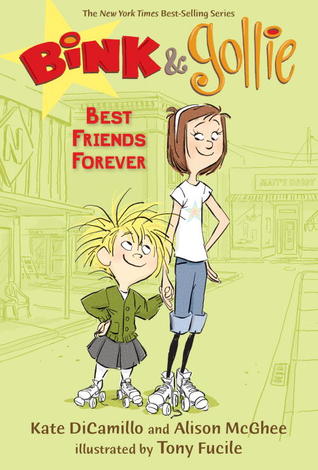
Story Time: Bink & Gollie

Do you have any 5- or 6-year-olds in your babysitting co-op who still really enjoy story time but want to feel a little more grown up? Kate DiCamillo's Bink & Gollie books are just the thing.

Bink and Gollie are best friends who are quite different from each other, but that doesn't stop them from being good and loyal friends who love one another unconditionally. They're great to read aloud because the dialogue is witty and quick, and the stories are interesting. Alison McGhee's illustrations are full of movement and expression, and they keep the story moving right along.

Here are a few choice lines from Bink & Gollie, Best Friends Forever:

"This Acme Stretch-o-Matic is top quality," said Bink. "I can feel it working already."

"Well, as far as collecting goes, you've got your rubber worms," said Mr. Eccles. "You've got your gold star stickers."
"You've got your decorative thimbles," said Mrs. Eccles. "You've got your rings made out of spoons."

Classic.